
RFA achieved a therapeutic success rate of 97.8% and an absolute volume reduction of nodule volume at 80.3 ± 13.7% (range: 38.7−100%) at the 12-month follow-up, with significant improvements in mean symptom and cosmetic scores.
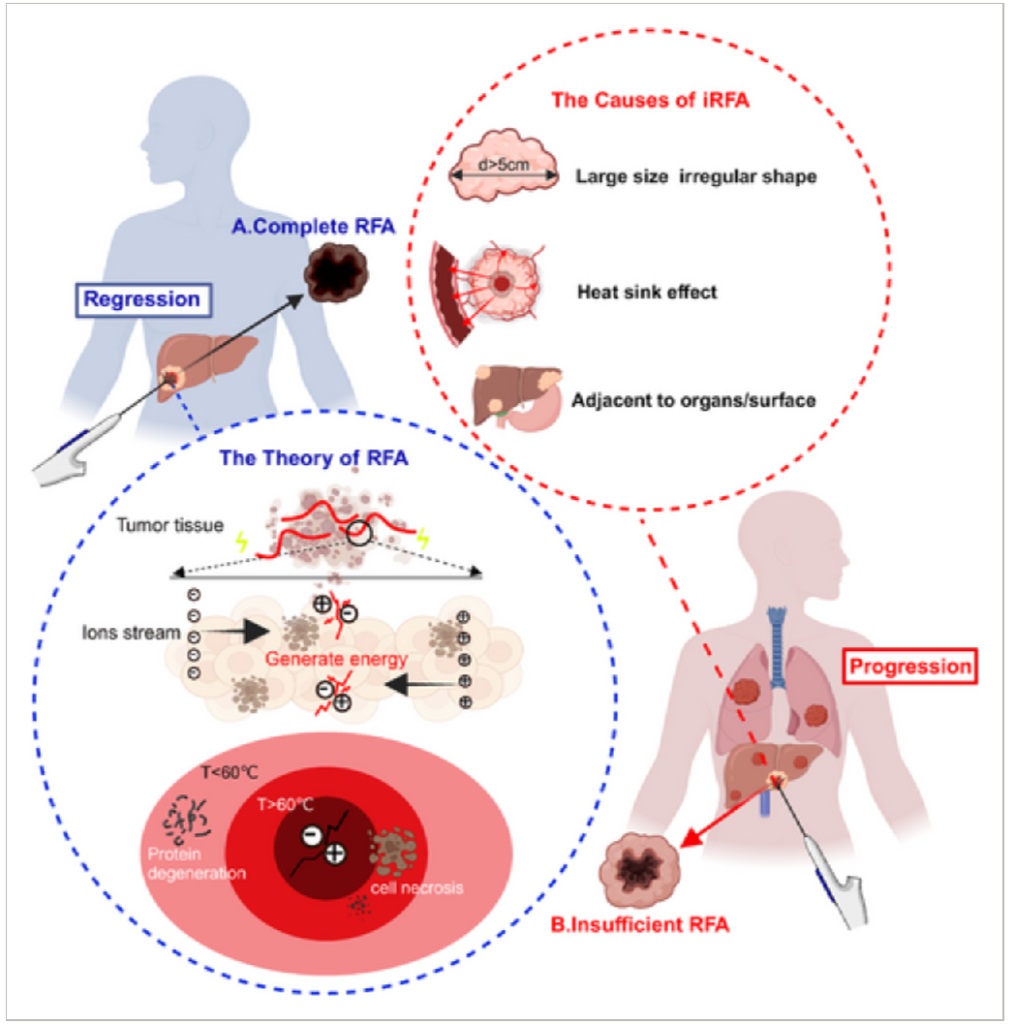
Since the late 19th century, the discoveries made by physicist D’Arsonval regarding the induction of thermal energy in biological tissues through alternating radiofrequency ablation (RFA) have paved the way for the application of radiofrequency technology in disease management.1 Over the past century, RFA has been widely utilized in clinical practice for various conditions, including cardiovascular diseases, benign nodules, and tumors.2 RFA offers several advantages, such as minimal trauma and rapid recovery, making it an increasingly viable treatment option.3, 4 With ongoing advancements in imaging and RFA technology, this technique has demonstrated significant benefits in the treatment of tumors, particularly liver tumors.5–7 RFA is a form of thermal ablation that induces coagulation necrosis of tumors by raising temperatures above 60°C.8 The underlying principle of RFA involves inserting RF electrodes into tumor tissue and delivering RF current, which generates high temperatures within the tumor to achieve cell destruction.9 This process produces frictional heat by oscillating and agitating ions in tissues when exposed to high-frequency alternating current (400–500 kHz).10, 11 The friction of ions in tissues generates heat, a phenomenon known as the Joule effect.12 Heat is then transferred outward from the thermal zone.13 Once the temperature reaches 60°C, intracellular proteins become denatured, and lipid bilayers melt.14 Consequently, tumor cells dehydrate and degenerate, leading to coagulative necrosis.